












Do you need to trim your cat’s nails?
You don’t need to trim your cat’s nails as a matter of routine. Healthy, active cats often take care of their claws themselves. By scratching, they remove the old, worn outer layers of their claws.
Scratching also serves several other purposes. Cats use it to stretch their muscles and mark their territory. So it’s not just a way to maintain their claws.
However, regular scratching doesn’t automatically mean that all your cat’s claws stay short enough. The dewclaws on the front paws deserve particular attention. These claws sit slightly higher up and make less contact with surfaces.
That’s why it’s important to check your cat’s claws regularly. This way, you’ll notice when your cat needs a little extra help.
How do you know if your cat’s nails are too long?
Your cat’s nails are too long when they become noticeably curved, frequently get caught on things or start curling towards the paw pads. In severe cases, a claw can even grow into a paw pad.
You don’t have to wait until your cat shows obvious signs of discomfort. When grooming your cat, look out for the following signs:
- The claws regularly get caught in blankets, carpets or other fabrics.
- A claw is clearly growing towards a paw pad.
- Your cat has difficulty fully retracting a claw.
- A claw looks unusually thick, curved or damaged.
- Your cat walks differently or avoids putting weight on one paw.
Not every clicking sound on the floor means your cat’s nails are too long. Pay particular attention to the shape of the claws and your cat’s behaviour.
Have you noticed a claw growing into the skin? Don’t try to cut it free yourself. Contact your veterinarian. The same applies if your cat is in pain or has swelling or a bleeding claw.
How to trim your cat’s nails safely
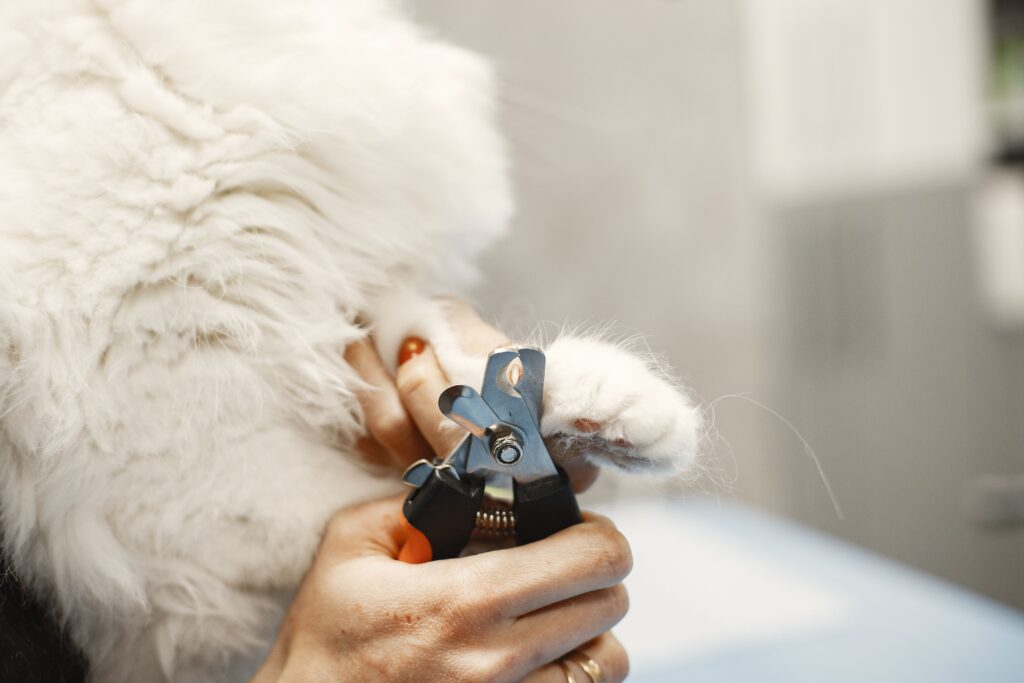
Safe cat nail trimming starts with staying calm and paying close attention to where you cut. Use nail clippers specifically designed for cats and only remove the sharp, transparent tip of each claw.
Inside the claw is a sensitive area called the quick, which contains blood vessels and nerves. In light-coloured claws, you can usually recognise it as the pink part. Never cut into this area.
Does your cat have dark claws, making the quick difficult to see? Be extra careful. If you’re unsure how much you can safely trim, ask your veterinarian to demonstrate the correct technique.
Follow these steps to trim your cat’s nails:
- Choose a quiet moment. Wait until your cat is relaxed. Avoid trimming their nails immediately after an energetic play session.
- Use suitable nail clippers. Choose sharp clippers specifically designed for cats.
- Gently hold a paw. Apply light pressure to the toe to make the claw visible.
- Locate the quick. Check where the pink area begins and leave plenty of distance between it and the cutting point.
- Trim only the very tip. Remove a small piece of the sharp claw tip.
- Reward your cat. Give your cat a treat or some attention when they remain calm. You don’t have to trim every nail in one session.
Is your cat still relaxed after trimming one nail? You can continue. If your cat becomes restless, stop and try again another time.
The goal isn’t to finish as quickly as possible. What’s most important is preventing nail care from becoming an unpleasant experience for your cat.
How often should you trim your cat’s nails?
There is no fixed nail-trimming schedule that suits every cat. Some cats hardly ever need help, while others require a small trim regularly.
The most important thing is to check your cat’s nails regularly. Look at their length, shape and any changes.
| Situation | What should you look for? |
|---|---|
| Active adult cat | Check that all claws are growing normally and don’t get caught on things. |
| Indoor cat | Monitor nail length and provide plenty of suitable scratching opportunities. |
| Senior cat | Pay extra attention to thick, long or excessively curved claws. |
| Cat with limited mobility | Look for reduced scratching behaviour and claws that aren’t being maintained naturally. |
| Cat with a damaged claw | Have the claw examined if it is painful, bleeding or growing abnormally. |
Older cats deserve particular attention. When cats become less active or have difficulty scratching, their natural claw maintenance can change.
So the question isn’t just how often you should trim your cat’s nails, but whether your cat is still able to maintain them properly.
Why scratching is important for your cat’s nails
Scratching helps cats remove old claw sheaths and keep their claws in good condition. It’s a natural behaviour that you shouldn’t try to discourage.
A suitable scratching area is therefore an important part of everyday cat care. Cats often want to stretch their entire bodies while scratching.
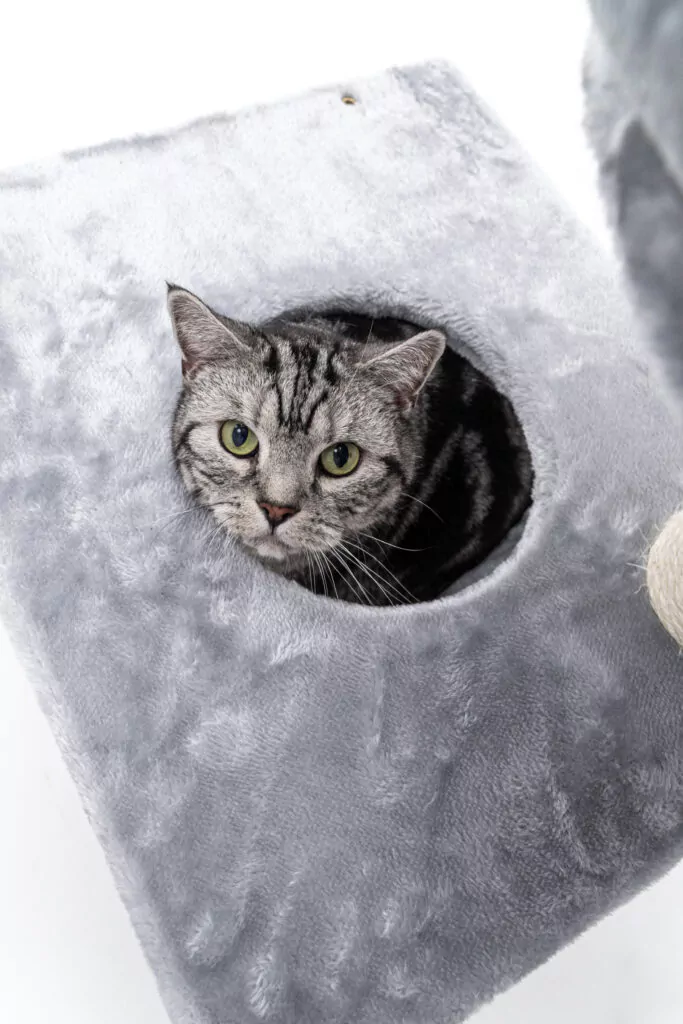
A sturdy cat tree provides the space they need. Sisal posts have a rough texture that gives your cat a good grip. A stable construction also prevents the cat tree from shifting whenever your Rebel scratches enthusiastically.
Not every cat scratches in the same way. Some cats enjoy stretching vertically, while others prefer a horizontal surface. That’s why it’s important to observe your cat’s scratching habits.
Important to know: a cat tree doesn’t replace regular nail checks. Scratching supports natural claw maintenance, but it doesn’t prevent overgrown nails in every cat.
What if your cat won’t let you trim their nails?
Does your cat refuse to have their nails trimmed? Don’t force it. Cats are sensitive to the way they’re handled, especially when someone touches their paws. Start without nail clippers. During a relaxed moment, gently touch one of your cat’s paws and reward them for staying calm.
Is that going well? Practise briefly holding a paw. Then introduce the nail clippers without immediately using them. This helps your cat become familiar with the process step by step. Some cats eventually accept a quick nail trim without any problems, while others continue to find it difficult.
While practising, watch for signs of stress, such as pulling away, freezing, growling or trying to escape. Stop when your cat clearly feels uncomfortable. If nail trimming remains difficult and your cat’s nails are too long, ask your veterinarian for help. They can safely trim the nails and explain how to gradually get your cat used to the process.
Common mistakes when trimming cat nails
When it comes to nail care, being careful is essential. A few simple precautions can help prevent unnecessary stress or injury.
- Cutting too short: never cut into the sensitive quick inside the claw.
- Holding your cat too tightly: forcing your cat can make them increasingly afraid of nail care.
- Trying to trim every nail at once: trimming just one or two nails per session is perfectly fine.
- Forgetting the dewclaws: these sit higher on the front paws and can easily become overgrown.
- Only checking nail length: also look for abnormal growth, damage and sensitivity.
Accidentally cut into the quick and your cat’s nail starts bleeding? Stay calm and gently apply pressure using clean gauze. Contact your veterinarian if the bleeding doesn’t stop quickly, is heavy or your cat is in significant pain.
For more information about safely checking and trimming your cat’s nails, visit the British animal welfare organisation Cats Protection.
Frequently asked questions about cat nails
You can carefully trim a kitten’s nails when necessary. Use suitable nail clippers and only remove the very tip. First, gently get your kitten used to having their paws touched. If you’re unsure, ask your veterinarian for advice.
The claws on the back paws can also become too long. In some cats, they wear down more naturally through movement, but this isn’t true for every cat. That’s why you should check both the front and back paws.
Active outdoor cats often don’t need their nails trimmed. Outdoor cats use their claws for climbing and gripping surfaces, among other things. Avoid unnecessary trimming. If their claws become too long or grow abnormally, consult your veterinarian.
Finding loose, transparent claw sheaths is usually normal. When cats scratch, the worn outer layer of their claws comes off. This doesn’t mean your cat has lost an entire claw.
Has your cat broken a claw and is experiencing pain, bleeding or difficulty walking? Contact your veterinarian. Don’t pull off a loose piece of claw yourself. A damaged claw can be painful and may require professional treatment.
The key takeaways:
- Not every cat needs regular nail trimming.
- Check your cat’s nails for length, shape and damage.
- Only trim the very tip and avoid the sensitive quick.
- Gradually get your cat used to having their paws touched.
- Provide suitable scratching opportunities to support natural claw maintenance.
Whether your cat needs their nails trimmed depends mainly on their age, activity level and natural claw maintenance. Keep checking their nails, provide plenty of opportunities to scratch and only trim when necessary. This way, you can help your Rebel continue moving, climbing and playing comfortably.
Disclaimer Petrebels is not a veterinarian or animal behaviour specialist. All content, information and tips on this page are intended for inspiration and informational purposes only. If your cat has symptoms or health problems and you’re unsure what to do, always contact a veterinarian or animal behaviour specialist.