









Smart Tips for a Cat-Proof Christmas Tree
Tip 1: Ensure a Stable Base
A Christmas tree toppling over when your cat decides to climb it? Definitely not something you want! Always start with a sturdy Christmas tree stand. If you have a real tree, choose one with a heavy root ball and place it in a large, stable planter. You can even add decorative gravel to make it extra heavy.
Bonus Tip: Secure your tree to the wall or ceiling. Tie one end of a string to the top of the tree and attach the other end to a hook or screw in the wall or ceiling for added stability.
Tip 2: Place the Christmas Tree in a Safe Spot
Cats don’t understand what a Christmas tree is – they just see a big, fun tree filled with shiny toys. So, it’s important to keep your cat away from the tree. You can do this by placing the tree in a safe or elevated location. For example, position the tree in a corner or place it on a high table or cabinet.
Tip 3: Hide Cords Wisely
Cats love flickering lights and, yes, cords. Christmas lights can be very tempting for them, but cords are dangerous if your cat chews on them. Safely hide them by using cable ties, taping cords securely to the wall, and storing the power strip in a cable management box. Another smart idea: opt for battery-powered LED Christmas lights. These lights don’t get hot, and there’s no live current—much safer for your furry friend!
Looking for a Christmas gift for your cat? This year, treat them to an extra fancy cat tree!
Tip 4: Avoid Using Fragile Ornaments
Glass and porcelain ornaments are beautiful, but they’re definitely not practical if you have a cat at home. A shiny bauble dangling from a branch is incredibly tempting for cats to play with. Instead, opt for unbreakable ornaments made from materials like:
- Paper
- Plastic
- Wood
- Wool
- Fabric
- Felt
Feeling crafty? You can also make your own Christmas decorations from materials like wood or cardboard. Not only are these much safer for your cats, but they also give you unique, personalized ornaments for your tree!
Tip 5: A Poster Christmas Tree (With Lights)
Hang a large poster featuring an image of a Christmas tree on your wall and decorate it with battery-powered fairy lights. This way, you can still create a festive atmosphere in your home without the challenges of a real tree. For an extra cozy effect, place some festively wrapped Christmas gifts underneath. How to do that safely? We’ll explain further in this blog!
Tip 6: Give Your Cat Their Own Christmas Tree
If you have an active cat who loves to play, why not make or buy a safe Christmas tree just for them? Here are three fun ideas:
1. A Christmas Tree Scratching Post
Treat your cat to their very own Christmas tree scratching post. Yes, they really exist! Your cat can climb and scratch to their heart’s content, keeping your beautiful real tree safe.
2. A Christmas Tree Made of Cardboard Boxes
Another great idea: create a Christmas tree from cardboard boxes. Gather five boxes of the same size and stack them in a row of three, followed by a row of two, and top it off with one final box. Secure them together well and cut holes so your cat can crawl through and hide. Decorate the outside of the cardboard tree with cat-safe ornaments or fun wrapping paper.
3. A Special Christmas Tree Just for Your Cat
You can also buy a small artificial Christmas tree for your cat and decorate it with fun cat toys or tasty cat treats. Not only will your cat love it, but it’s also a clever way to distract them from your “real” tree while letting them enjoy the festive season too.
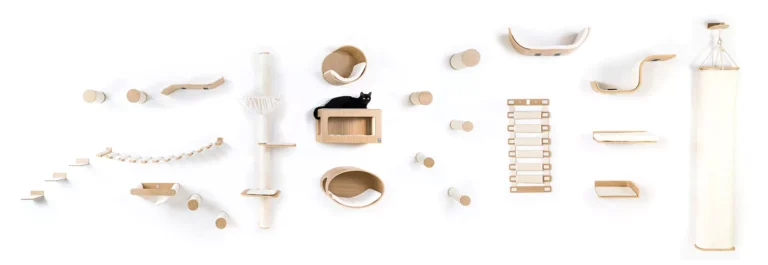
Looking for something fun for your wall? Check out this cat wall installation—perfect for feline festivities!
Tip 7: Protect Your Christmas Tree
Cats are very stubborn, as every cat owner knows. This also means that some cats just can’t get enough of your Christmas tree. The only way to keep it safe is to block it off. For example, place a small fence around the tree, barricade the base of the tree with large boxes, and/or put some aluminum foil around your Christmas tree – cats don’t like the sound or feel of the foil, so with a bit of luck, they’ll stay away.
Cats also dislike the smell of orange and lemon, so you could spray some citrus spray on your tree.
Tip 8: Wrap Christmas Gifts Safely
Want to place gifts under the tree? It’s a fun and festive idea. But be mindful of how you wrap them, as some materials and objects can be dangerous for cats. Avoid using curling ribbon and small or sharp objects, as your cat might ingest them, which could lead to serious problems.
Instead, wrap gifts with safe materials such as paper, fabric bows, and natural string. You can also use gift bags closed with a beautiful fabric ribbon or bow.
Tip 9: Is a (Nordmann) Christmas Tree Toxic for Cats?
Yes, a real Christmas tree is toxic to cats. The pine needles, in particular, are dangerous – they are sharp, and the sap they contain is toxic. If your cat eats them, it could become very ill. If you have a Christmas tree with a root ball, the water in the container (Christmas tree water) is also toxic to cats. Always ensure your cat cannot access it, or play it extra safe by opting for an artificial tree. They’re not only safer but also last much longer! Additionally, never place food or water bowls under or near the Christmas tree.
As you can see, making your Christmas tree cat-proof isn’t difficult and can even be quite fun to do. With a few smart adjustments, you and your cat can enjoy a wonderful and safe Christmas together. Still looking for a fun gift for your cat? Check out our products, where you’ll find the most beautiful scratching posts, scratching towers, and wonderfully scented cat litter. Happy holidays!
Here’s how to make sure your cat stays calm during holidays and fireworks
Disclaimer: Petrebels is not a veterinarian or behavior specialist: all content, information, and tips in this blog are intended to inspire and inform. If your cat has symptoms or problems, or if you’re unsure about its health, always consult a veterinarian or behavior specialist.