









Gentle and stable. That’s the British Longhair. But this breed is also calm and easily adaptable. Ideal as a family cat. But be aware: most British Longhairs don’t like being picked up or sitting on laps, though they love cuddling and being with their owners. Want to know everything about this unique breed? Keep reading!
In this blog:
- How did the British Longhair originate?
- The personality of a British Longhair
- The appearance and coat of a British Longhair
- The health of a British Longhair
- How long does a British Longhair live?
- How to care for a British Longhair?
- How much does a British Longhair cost (buying a kitten)?
1. How did the British Longhair originate?
The British Longhair breed is descended from the British Shorthair. This breed also comes from England. In the early 20th century, the British Shorthair was crossed with a Persian cat, as breeders wanted a long-haired variant with a gentle character. From this, the first line of British Longhairs was born – a breed with a short, fluffy coat and a calm temperament. Around the 1940s, British Longhairs were crossed again, and the kittens born at that time inherited the gene for long hair.
These cats became popular, and it’s no surprise, as British Longhairs inherited the calm character and beautiful long coat of the Persian cat, while retaining all the breed characteristics of the British Shorthair – also known as Britannica, Lowlander, or Highlander. The British Longhair was internationally recognized as an official breed in 2017, though in the Netherlands, this recognition came earlier, in 2012.
Looking for a suitable scratching post for this breed? These cat tree are designed for British Longhairs!
2. The personality of the British Longhair
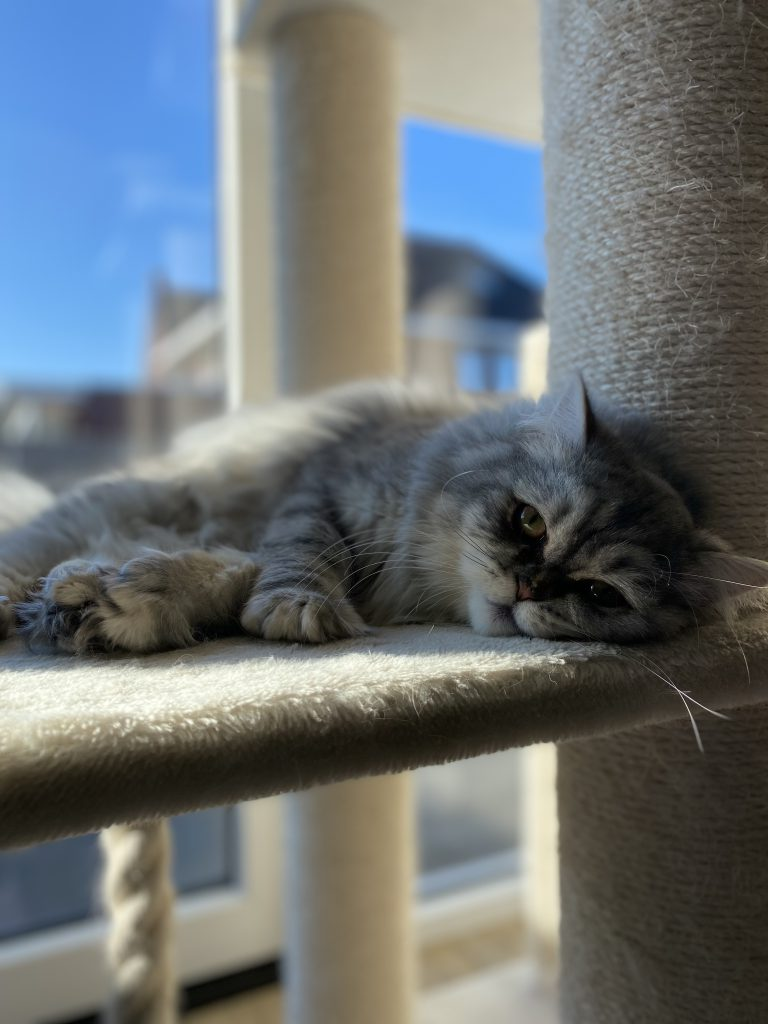
British Longhairs are cats with an even and stable temperament. They are calm, friendly, and can easily adapt to various situations. However, they may initially be a bit shy with new people. These cats are very fond of their owners, love cuddling, and often come to ask for a pet.
Looking for a real lap cat? Then a British Longhair is not the best choice – this breed generally doesn’t like to be picked up and doesn’t enjoy sitting on laps. But they do enjoy being near their owners. So, they are certainly cozy companions! And they are easy to care for, as British Longhairs are great at entertaining themselves.
3. The appearance and coat of a British Longhair
British Longhairs are fully grown only after three years and have an average (normal) build. They are nice and compact, weighing between 3.5 to 8 kilograms. Females are noticeably smaller than males – male cats are much sturdier and have broader jaws. The legs of this breed are strong and relatively short, with round paws.
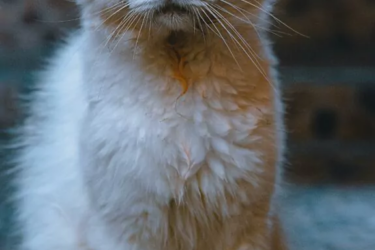
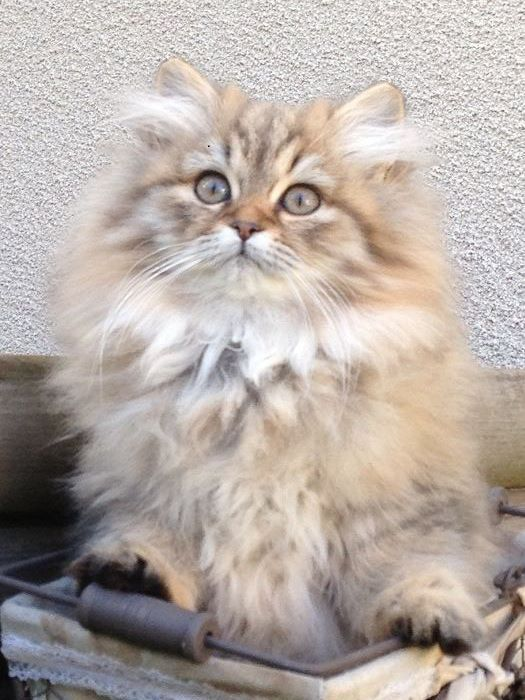
The heads of these cats are round and broad, with pleasant full cheeks. Their noses are short and broad, and their chins are firm (just like the rest of their body). The ears of the British Longhair are small, rounded, and have fur on the inside. The eyes are orange, blue, and green, and they are beautifully round and large.
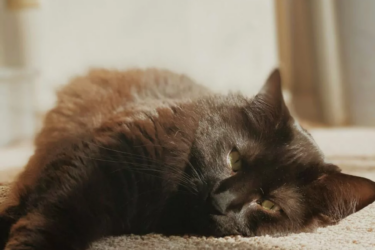
British Shorthairs have a fluffy coat that is semi-long to long. Around the eyes and nose, the coat is short, but it becomes longer starting from the cheeks. The ruff of this breed is especially impressive – it is beautifully long and thick. The undercoat is also thick, making the coat noticeably full and standing out beautifully. This also applies to the coat of the tail.
As for color, it can vary widely with this breed: black, white, cream, or blue. All of these are acceptable. Most cats are solid in color, but patterns are also quite common. For example, with white markings, but also tabby or point markings. The latter means that the fur around the eyes, ears, tail, and legs is darker in color.
4. The health of a British Longhair
Pedigree cats are bred for unique characteristics. The British Longhair cat also has traits that make it special, such as:
- Fully grown only after 3 years
- Compact build
- Short nose
Do you think a British Longhair cat is a good fit for you? Then do thorough research on the health of this breed. British Longhair cats are generally healthy, but they have a tendency to become overweight and to develop the same diseases as a British Shorthair. It’s important to be aware of this.
If you want to bring a healthy cat into your home, ask for advice from a veterinarian. You can also consult the websites of Dier & Recht and the Netherlands Food and Consumer Product Safety Authority, where you’ll find information on the health of the breed, whether it is allowed, and what rules apply to breeders.
Always buy a British Longhair from a reputable breeder, preferably one affiliated with a breed association. This ensures that the cat is healthy and well-cared for. Also, ask the breeder for a health certificate or guarantee for extra assurance.
5. How long does a British Longhair live?
British Longhairs are generally strong and healthy cats that – when well cared for – can live between 10 to 12 years. Sometimes, they can even reach 15 years of age!
6. How to care for a British Longhair?
And how often should you comb a British Shorthair? A British Longhair is an easy breed to care for. Even though the breed has long hair and a thick undercoat, it doesn’t mat particularly quickly. It’s best to comb and brush the cat once a week. During the shedding seasons, you should do it more frequently. Pay extra attention to the fur around the rear and under the armpits – this can mat and tangle faster than the rest of the fur. Always spend extra time on those areas.
It’s also a good idea to get a British Longhair kitten accustomed to general grooming. This includes brushing and combing, teeth brushing, and nail trimming. If you start early, the cat will have fewer problems with it as they grow older. And that will make your job much easier!
And what else does a British Shorthair need in terms of care?
- A safe home
- Love and attention
- Nutrition suited to the breed
- Always access to fresh water
- Sufficient physical activity and stimulation (play!)
- Regular visits to the veterinarian
- A cat tree for British Longhairs
- Comfortable cat beds
- A clean litter box with clumping litter
- Vaccinations and protection against parasites, such as fleas, worms, and ticks
Discover here what the approximate cost of caring for a cat entails
7. How much does a British Longhair cost (buying a kitten)?
Do you want to buy a British Longhair cat? Then go to a certified breeder, preferably one affiliated with a breed association. This way, you can be sure you’re buying a healthy, well-socialized cat that has been bred in a humane way. Always ask for the papers, a health certificate, and check the kitten’s parents. Also, take a look at their living conditions: is it clean and homely, and are the parents present? This is a good sign. Avoid buying cats from platforms like Marktplaats, eBay, or puppy mills.
A British Longhair from a good breeder costs around 800 euros. If you’re looking for a cat but it doesn’t have to be a pedigree, consider checking shelters or adoption agencies. Many loving cats are waiting for a nice home there.
And remember: you’re not getting a cat for a short time, but for its entire life. Are you willing to take good care of the animal and set aside money for its care and vet visits? If so, a British Longhair could become your new best friend!
Also, read everything about the Lykoi cat here
Disclaimer: Petrebels is not a veterinarian or a behavior specialist. All content, information, and tips in this blog are meant to inspire and provide information. If your cat has any issues or problems, and you’re unsure about your cat’s health, always consult a veterinarian or a behavior specialist.