












Lykoi cats are social and smart. But the most striking feature of this breed is their coat, which makes them resemble small wolves. Because they are often partially hairless, they are banned in the Netherlands. Discover everything about the Lykoi here!
In this blog, we tell you exactly what you want to know about Lykoi cats, such as:
- What is the personality of a Lykoi cat?
- The appearance and coat of a Lykoi
- How to care for a Lykoi
- How long does a Lykoi live?
- The health of a Lykoi cat
- The origin of the Lykoi
- Buying a Lykoi (kitten)
And we also tell you:
- What is a wolf cat?
1. What is the personality of a Lykoi?
Lykoi cats are affectionate and sweet. They are also playful and full of energy. They don’t mind visitors or other strangers in the house, but they can be a bit shy. They might even seem a bit distant at first. They are very attached to their own owners and fellow cats and may hide behind them when there are visitors.
A Lykoi is also notably intelligent – this breed easily solves cat puzzles, strange obstacles, and problems on its own. And it loves to play. Lykoi cats enjoy the company of their humans, but they can also entertain themselves very well. They are very playful and active. Since it is advised to keep Lykoi cats indoors, a good cat tree for indoor cats is essential. This provides a space where a cat can express all of its natural behaviors – scratching, climbing, and jumping.
A Lykoi may be a bit shy with strangers but is very affectionate with its owners!
2. The appearance and coat of a Lykoi
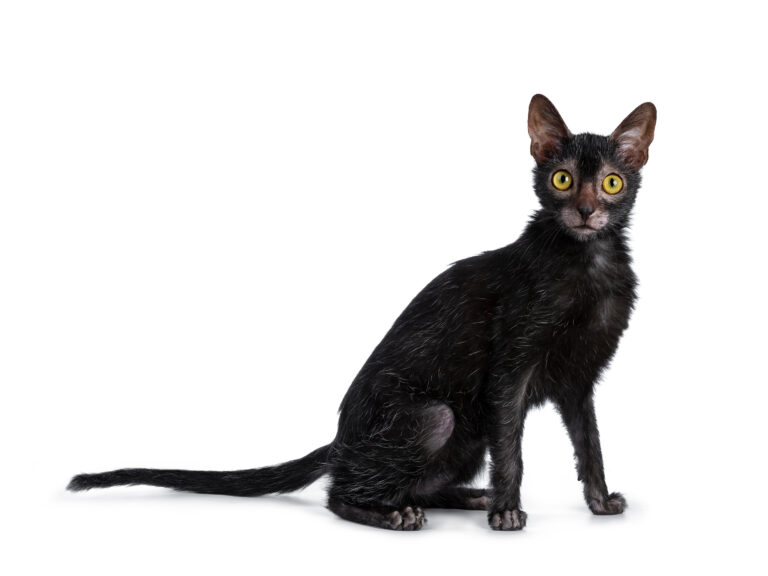
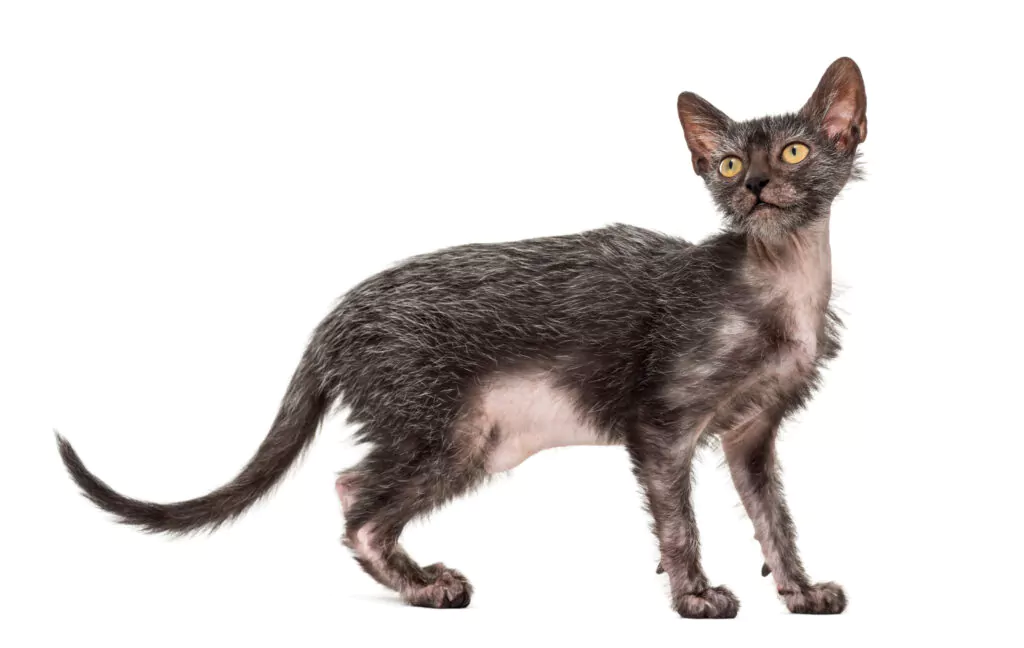
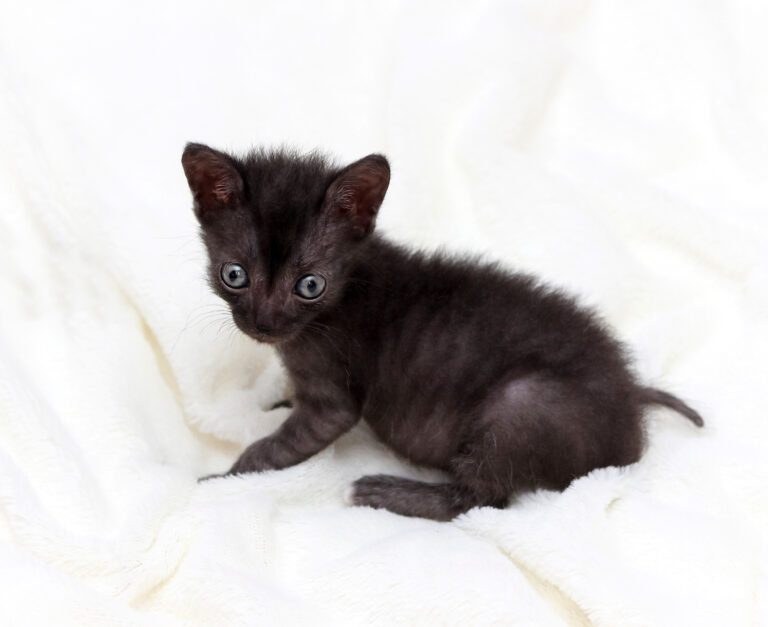
Lykoi kittens are born fully furred. But over time, their coat begins to shed. In the first few years, this is mostly noticeable on their belly and snout – this cat has no hair around its chin, nose, and eyes. These features make Lykoi cats very popular, as their combination with their dark – almost black – coat gives them a wolf-like appearance.
A Lykoi is partially hairless. And this hairlessness increases with age, which means that most Lykoi cats eventually end up with no fur at all. This is why this breed is banned in the Netherlands – due to their lack of fur, they are very susceptible to cold, sunburn, and skin diseases such as cancer. Also important to note: Lykoi cats are hairless, but not hypoallergenic.
In terms of size, Lykoi cats are average, although males are sturdier than females. The ears of these cats are long, pointed, and wider than those of other breeds. Their tails also look different. In the average cat, the tail is the same length or longer than the body. But the tail of a Lykoi is much shorter!
3. How to care for a Lykoi?
Because a Lykoi cat is partially or fully hairless, you might think that this cat doesn’t need to be brushed often. But the opposite is true. Because they shed so much hair, they should be brushed gently once or twice a week. Lykoi cats that are (almost) completely hairless should be bathed or washed properly once a month. This helps keep their bare skin free from dirt. They can also accumulate some oil around their nails and ears. Regularly clean these areas with a soft cloth.
Additionally, the Lykoi needs the same care as any other cat:
- Lots of love and attention
- Variety of toys
- Good nutrition
- Clean litter boxes with good litter
- Always fresh water
- Protection against parasites
- A safe home
- Comfortable sleeping spots
- A stable cat tree for active cats
- Regular vet check-ups
4. How long does a Lykoi live?
Lykoi cats are very rare, so there isn’t much information available about their life expectancy. However, it is estimated that, with good care, they can live between 12 and 16 years.
5. The health of a Lykoi cat
Pedigree cats are bred for unique characteristics. The Lykoi also has traits that make it special, such as:
- This breed is born with fur
- But eventually becomes (almost) completely hairless
- Large and pointed ears
Do you think a Lykoi might be a good fit for you? Then do thorough research on the health of this breed. Many pedigree cats are prone to hereditary conditions. Lykoi cats, for example, have a high risk of developing skin diseases or skin cancer. It’s important to be aware of this.
If you want to bring a healthy cat into your home, ask for advice from a veterinarian. You can also consult the websites of Dier & Recht and the Netherlands Food and Consumer Product Safety Authority, where you’ll find information on the health of the breed, whether it is allowed, and what rules apply to breeders.
6. The origin of the Lykoi
Lykoi cats originated in the United States without human intervention. In other words, their genes were not manipulated, and kittens with these distinctive characteristics were born spontaneously. In 2011, two breeders brought together unrelated cats with these abnormal genes, and the first litter of Lykoi kittens was born. TICA granted this breed registration status in 2012, but that doesn’t mean Lykoi cats are allowed everywhere. In the Netherlands, breeding and keeping this breed is prohibited.
7. Buying a Lykoi (kitten)
Lykoi cats cannot be bred or kept in the Netherlands. Therefore, there is no known price. However, in other countries, you can expect to pay $5000 or more. But yes, this breed has issues. And you obviously don’t want that. So, don’t buy a Lykoi, as it won’t bring joy to you or the cat.
Would you still like to have a cat? The ‘regular’ house cat is usually very healthy. There are also many healthy cat breeds. For that, go to a certified breeder, preferably one affiliated with a breed association. This way, you can be sure you’re buying a healthy, well-socialized cat that has been bred in a humane way. Always ask for the papers, a health certificate, and check the kitten’s parents. Also, take a look at their living conditions: is it clean and homely, and are the parents present? This is a good sign. Avoid buying cats from platforms like Marktplaats, eBay, or puppy mills.
Looking for a cat, but it doesn’t have to be a pedigree? Then also check shelters or adoption agencies. Many loving cats are waiting for a nice home there. And remember: you’re not getting a cat for a short time, but for its entire life. Are you willing to take good care of the animal and set aside money for its care and vet visits? If so, a cat could become your new best friend!
The Lykoi in a nutshell:
- Lykoi cats are sweet, smart, and sometimes a bit shy.
- A Lykoi is partially hairless and has a dark coat.
- A Lykoi needs to be well cared for and should be gently brushed 1 to 2 times a week.
- A Lykoi can live between 12 and 16 years old if properly cared for.
- Because they are so rare, not much is known about the health of Lykoi cats. However, it is known that they can develop skin problems.
- The Lykoi comes from America and was naturally developed.
- You cannot buy a Lykoi kitten in the Netherlands, as the breed is banned.
Discover everything about the incredibly sweet Ragdoll here
Disclaimer: Petrebels is not a veterinarian or a behavioral expert. All content, information, and tips on this blog are meant to inspire and provide information. If your cat has any issues or problems and you have doubts about your cat’s health, always consult a veterinarian or a behavioral expert.