









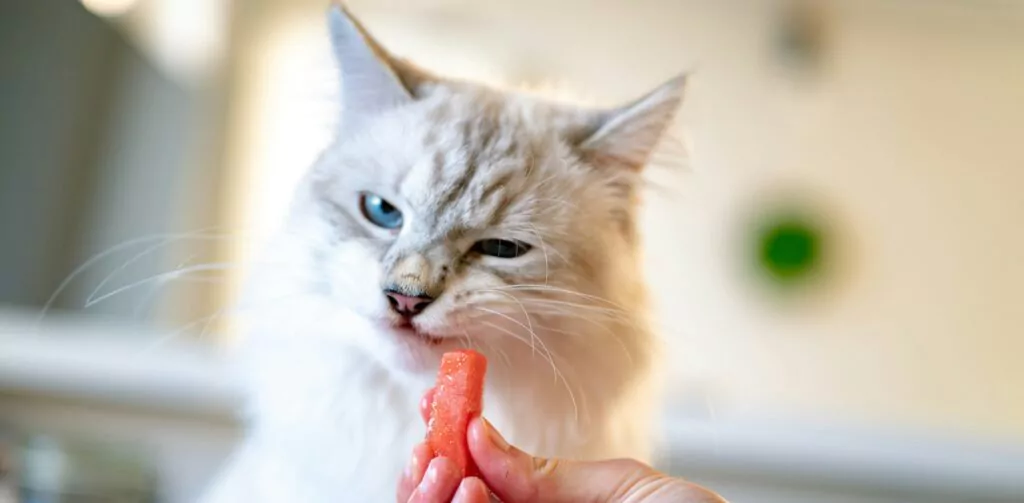
Avocados are good for humans, but not for cats. Cats should also not be given milk because they are lactose intolerant. What makes a cat sick, and what things are toxic to cats? We’ll tell you here!
In this blog:
- Which foods are toxic to cats
- Can you give milk to a cat?
- What do cats eat in the wild?
- What can a cat eat?
- Can a cat eat from the same pot?
- What else is toxic to cats?
1. Which foods are toxic to cats?
Cats have a sensitive digestive system and cannot tolerate many things that we eat without problems. This is because their bodies are different from humans. Cats are carnivores, and their digestive system is designed to break down animal proteins and fats. Many plant-based foods (such as vegetables and fruits) are not well digested by cats, and some are even toxic to them.
Below, you’ll find the most common foods that are harmful or toxic to cats.
But be careful: we cannot cover everything in this blog, so always do thorough research on what your cat can and, most importantly, cannot eat. And call your vet if you’re unsure.

Also, read our blog: This is what a cat needs!
Grapes and Raisins
Can cats eat grapes and raisins? No, grapes and raisins contain a substance that can cause kidney failure in cats. Even a small amount can be dangerous. The exact substance is not yet well known, but it doesn’t really matter – you should never give grapes or raisins to cats.
Onion, Garlic, and Chives
We use onions, garlic, and chives a lot in our own kitchen. And although they are good for us, they are not good for cats – these foods can damage the red blood cells of cats and can cause anemia. You may notice this if your cat becomes lethargic, refuses to eat, or has pale mucous membranes.
Chocolate and Caffeine
Chocolate contains a substance called theobromine. This substance is very harmful to cats – especially dark chocolate and pure cocoa are dangerous for them. Caffeine, the substance found in coffee, dark tea, and energy drinks that helps you wake up, is also very harmful to cats – it causes an increased heart rate, trembling, and sometimes even seizures. So, always keep this away from your cat.
Avocado
Avocados are also not good for cats. They contain a substance called persin, which is toxic to cats. Avocados can cause your cat to vomit, have breathing problems, or develop diarrhea. Do you like eating avocados yourself? Always make sure your cat doesn’t get any.
Is your cat having diarrhea? Then contact your vet for advice. And be sure to clean the litter box regularly with the best clumping cat litter, as it will stay much cleaner and fresher for a longer time!
Raw Potatoes and Green Tomatoes
Raw potatoes and green tomatoes both contain a substance called solanine. This is a natural toxin that can cause nausea, diarrhea, and neurological problems in cats. So, never give your cat these!
Nuts (and Macadamia Nuts)
Macadamia nuts are delicious for humans, but they cause troubling issues in cats. These include weakness, vomiting, and trembling. But you should keep all other nuts away from cats as well. That’s because most types of nuts are high in fat, which can cause pancreatitis – a painful and sometimes dangerous inflammation of the pancreas.
Eggs
Can a cat eat an egg? No, it’s best not to give raw eggs to cats. First, raw eggs can contain salmonella, which can make cats sick. Raw eggs also contain an enzyme called avidin, which causes a biotin deficiency. This can lead to a poor coat or skin problems in cats. So, it’s better to cook the egg and enjoy it yourself.
As you can see, a cat is definitely not an omnivore and can even get sick from things that are good for humans. Keep these (and other toxic foods) away from your cat. Also, be careful with food scraps on plates or leftovers that fall on the floor. Do you think your cat has eaten something harmful? Contact your vet immediately!

2. Can you give milk to a cat?
Milk is absolutely not good for cats! Cats are lactose intolerant, and milk contains a lot of lactose that they cannot digest. A cat drinking milk can not only experience digestive problems, but it can also become overweight and develop other health issues. So, no matter how much your cat likes it, don’t give your cat regular milk!
Which milk is suitable for a cat then?
Ideally, you should not give milk to your cat. It’s better to give your cat water, as it is truly good for them. If you still want to give your cat something milky, give them special cat milk, as it contains no lactose. Only give it as a treat and not as a substitute for water.
Is your cat drinking too little? Always add a little lukewarm water to your cat’s wet food. Or choose a special water fountain for cats, as most cats love running water!
3. What do cats eat in the wild?
Cats are naturally carnivores – this means that their diet primarily consists of meat. In the wild, cats hunt small animals, such as mice, birds, and insects. These prey animals contain all the nutrients they need, such as proteins and fats. Plants, vegetables, and other plant-based foods play almost no role in a cat’s diet.
A wild cat typically eats several small meals a day, depending on what it catches. That’s why our domestic cats also prefer small amounts of food spread throughout the day, rather than one large meal at once.
4. What can a cat eat?
As we mentioned earlier: cats are carnivores. You can give your cat some cooked (not too fatty) fish or cooked chicken as a treat – make sure it’s as pure and fresh as possible and don’t add any spices, salt, or sauces.
Most people simply give their cats cat food. You can choose from dry cat kibble or wet food from a can or pouch. Not sure which food is good? Ask your vet for advice.
5. Can a cat eat from the same plate?
No, our food is not good for cats because it is processed, contains a lot of salt, and may have spices or seasonings that can be harmful to your cat. So, don’t give your cat leftovers from your own meal and keep them away from seasoned or fatty foods. And, of course, all the foods we’ve mentioned at the beginning of this blog.

6. What else is toxic to cats?
At the beginning of this blog, we told you which nutrients, vegetables, fruits, and nuts are dangerous for your cat. But there are also other things in and around your house that can be dangerous or toxic to cats. Such as:
Medications
Medications are the number one cause of poisoning in pets. A fairly recent American study shows that cats often come into contact with them. It’s not surprising, as pills can look a lot like treats to cats. Always be careful, as painkillers, acetaminophen, and other medications are life-threatening to cats! Store them safely and never take your medications in front of your cat.
Houseplants and Flowers
Do you like having plants in your house? But you also want to keep your cat healthy and happy? Always check if the plant is toxic to your cat. For example, lilies, Aloe Vera, monstera (Swiss cheese plant), tulips, and sansevieria can cause severe poisoning.
Garden Plants
Garden plants can also be dangerous. Think of yew, wisteria, and oleander. These are highly toxic to cats. So, check beforehand which garden plants are safe for cats.
Cleaning Products
In fact, all cleaning products are toxic to cats. Chlorine, bleach, ammonia, and all-purpose cleaners, for example. These products can cause poisoning if cats ingest them or cause burns if they come into contact with them.
Antifreeze (ethylene glycol)
Antifreeze is also extremely dangerous for cats. Even small amounts of this substance can be deadly to your cat. Be very careful with it!
There are more things and substances that are dangerous to cats. So always do thorough research on what is toxic to cats and what is not. Do you think your cat has eaten something toxic? Immediately call the vet and ask for advice!
If you have one or more cats in your house, you must pay close attention to ensure they don’t eat anything harmful. Only give your cat food that is specifically made for cats and never toxic foods or milk. Instead, provide a diet that suits their natural needs. Always store toxic substances in places your cat cannot reach.
Want to pamper your cat? Treat them to a nice cat tree, as the movement they get from climbing, scratching, and playing is very good for them!
Disclaimer: Petrebels is not a veterinarian or behavior expert: all content, information, and tips on this blog are meant to inspire and are for informational purposes. If your cat has symptoms or problems and you are unsure about their health, always visit the vet or a behavior expert.