














1. What does each meow mean?
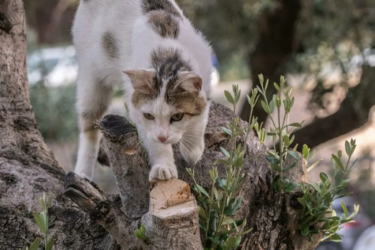
Cats only meow to communicate with humans. If you pay attention, you’ll notice that cats rarely meow at each other. So, when your cat meows, it’s almost always meant just for you. You can think of it as a language they’ve created specifically for us (Source: International Cat Care).
Here’s what the different types of meows mean:
- Short and high-pitched: Often a greeting or a cheerful “hello!”
- Long and plaintive: Usually a request, such as “open the door” or “give me food.”
- Repeated and loud: A clear call for attention.
It’s important to pay attention to the time of day, the pitch of the meow, and your cat’s body language. If your cat meows at the front door, they likely want to go outside. If they meow around mealtime, they’re probably just hungry.
Did you know that every cat needs a cat tree? Scratching is part of a cat’s natural behavior and helps keep them happy and calm.
2. What does your cat mean when they purr?
Every cat lover knows the sound: a cat contentedly purring away. Purring is often seen as a sign of satisfaction and relaxation. Your cat is enjoying themselves. And most of the time, that’s true. But purring can also mean something else.
Cats can also purr when they’re in pain or feeling scared. Purring is a way for cats to soothe themselves. That’s why it’s important to pay attention to your cat’s posture, eyes, and tail to understand how they’re really feeling.
Purring sounds range between 25 and 150 Hertz and have a healing effect on bones and tissues (Source: Scientific American).
3. Why do cats growl, hiss, snarl, and scream?
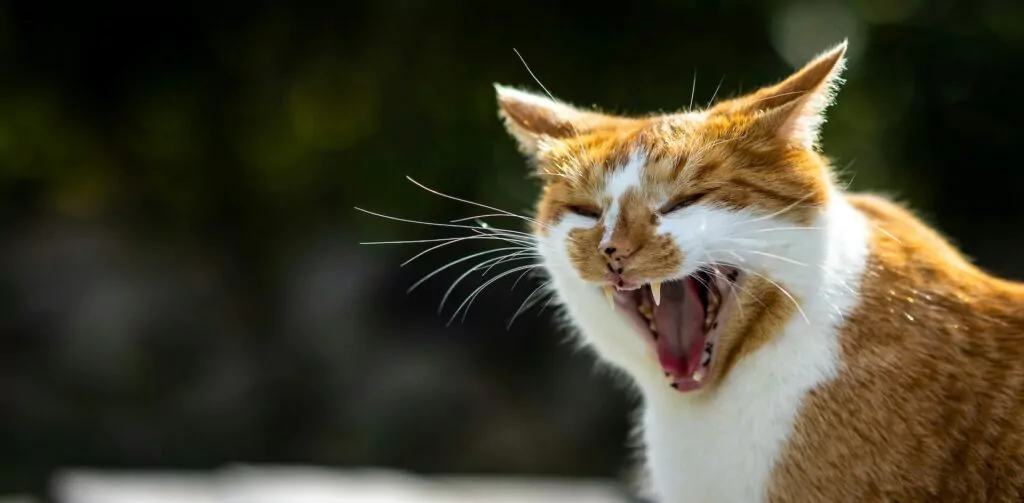
Has your cat suddenly turned into a mini tiger, growling, hissing, or screaming? Your cat is feeling uncomfortable – they’re scared, stressed, in pain, frustrated, or very angry (Source: The Humane Society). Cats often make these impressive sounds in the following situations:
- At a visit to the vet
- When there’s a new or unfamiliar cat nearby
- When your cat feels threatened
- When your cat is in pain
- When your cat is startled or feels unsafe
The best way to handle a cat expressing itself this way is to stay calm and give your cat space. Don’t comfort or pet them, but stay nearby and allow them to calm down at their own pace. You’ll see: once they’ve relaxed, they’ll come to you on their own.
Tip: Cats scratch objects to release energy and frustration. So, a good and stable cat tree in your home is essential!
4. Enjoying a chirp (or chattering)
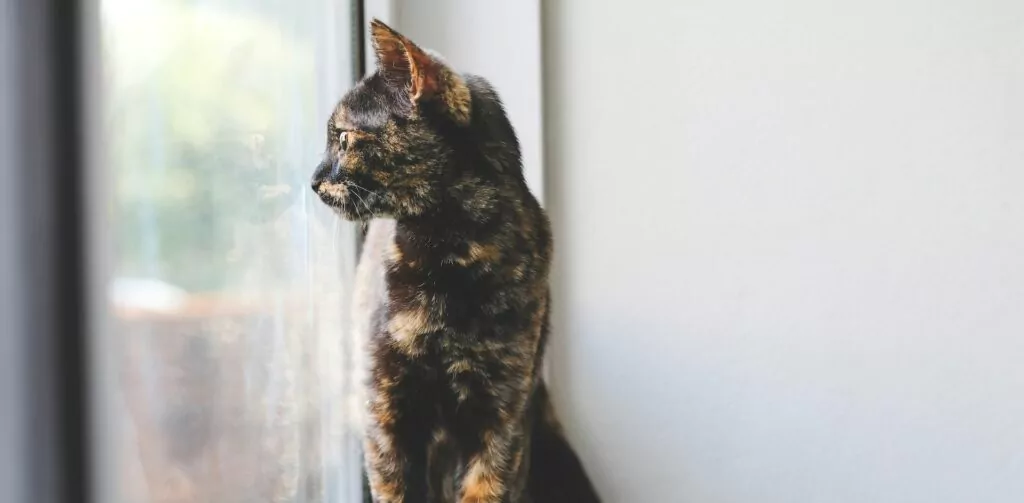
Do you have a cat? Then you’ve probably experienced this. Your cat is sitting on the windowsill, looking outside, and suddenly makes a strange sound that resembles chirping or chattering – a clicking noise cats make when they see a bird or insect.
This sound means your cat is excited about what they see and perhaps frustrated by the fact that they can’t get to it. It’s part of their instinctive behavior and is very normal for cats (Source: National Geographic). And honestly, it’s quite funny!
5. Which cat sounds can humans not hear?
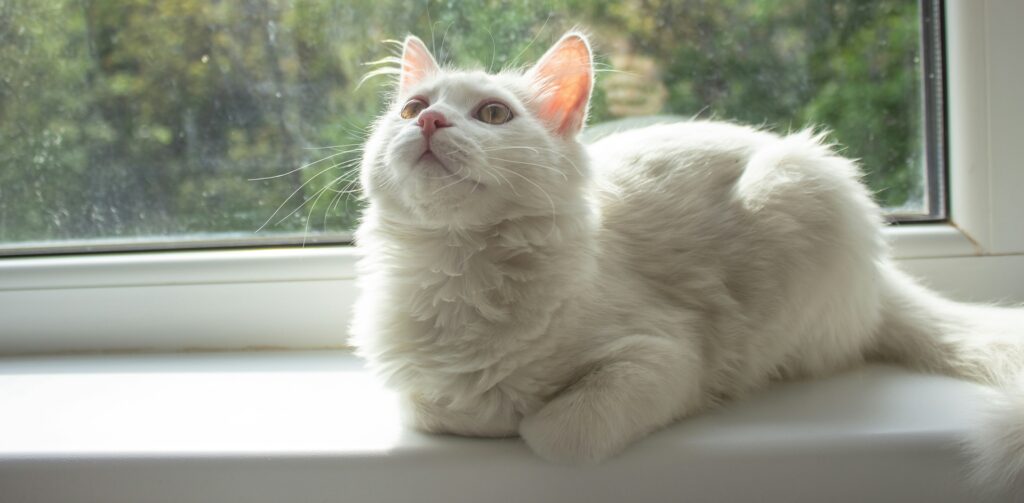
Cats have much better and broader hearing than we do. These amazing creatures can perceive ultrasonic sounds (sounds with a frequency higher than 20 kilohertz, which humans cannot hear).
Some researchers even believe that cats communicate with each other using very soft, nearly inaudible sounds (Source: Journal of Comparative Psychology). A mother cat calling her kittens in a frequency we can’t hear, or two cats subtly talking to each other without meowing. Fascinating, right?
6. Can cats communicate without meowing?
Did you know that cats also tell us a lot without making any sounds or meowing? Cats primarily communicate through body language. If you really want to understand what your cat means and how they feel, it’s also important to delve into this. What does it mean when your cat slowly squints their eyes? Or how does your cat feel when their tail is curled?
Want to learn more about your cat’s body language? Check out our mini-course on cat language!
As you’ve read: a cat doesn’t just say a lot with their body language, but also with all the different sounds they make. And once you get to know those sounds, you’ll understand exactly what your cat is telling you. Nothing will stand in the way of you becoming the best of friends!
Disclaimer: Petrebels is not a veterinarian or behavior expert; all content, information, and tips on this page are meant to inspire and are for informational purposes. If your cat has symptoms or issues and you’re unsure about their health, always consult a veterinarian or behavior expert.