












1. A cat is not a toy
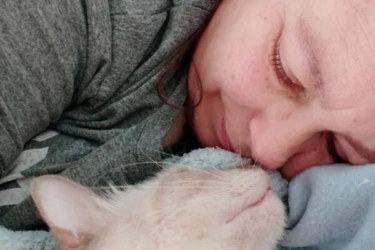
Children and cats are often fond of each other. But it doesn’t happen automatically and as a parent you play an important role in this. The most important lesson you can give a child is: a cat is not a toy! It is an animal that enjoys love and attention, but can also feel pain and fear. So you must teach your child how to deal with their new little friend. And we are happy to help you with this blog, full of smart tips to ensure that your child always treats your cat respectfully and with love.
2. Learning to recognize and respect boundaries
Cats can show their boundaries very clearly. If a child is too busy, rough or pulls your cat’s tail, your cat will react immediately. Think of walking away, ears back or a swishing tail. And if a cat is really in pain or scared, it can hiss, growl or even lash out. Not nice, but that is not the cat’s fault – it is your child who does not properly understand the cat’s boundaries.
As a parent or grandparent you can use such a moment as an educational moment. Clearly explain to your child what is happening: ‘Do you see your cat walking away? That means he wants to be left alone.’ Or: ‘Did the cat growl or scratch you? That means you hurt him.’ This way you not only teach children to understand cats, but also that they must take into account the boundaries of others.
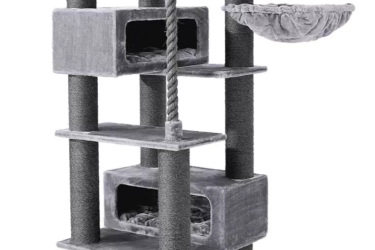
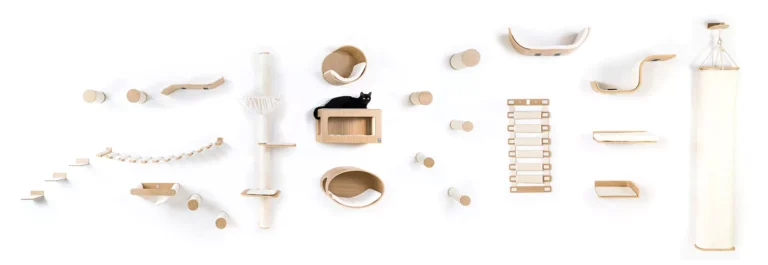
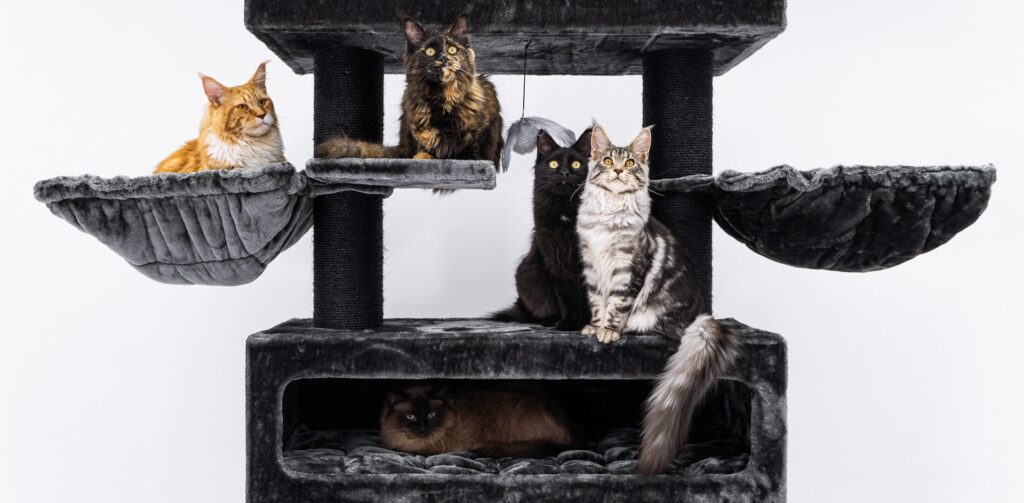
Cats need a place where they feel safe and can retreat. A scratching post with sleeping houses or hammocks is an ideal place for this. And tell your child that they must leave the cat alone when it is sleeping or hiding, because this way he learns to have respect for the rest and privacy of the cat.
3. Helping with the care of the cat
Children really enjoy helping you. Do you want your child to build a good bond with your cat? Then involve your child in small care tasks for your cat. For example, you can fill the water bowl together and put it down for the cat, feed the cat together and tidy up the cat toys together. Giving the cat a tasty cat snack is also fun.
By doing these kinds of chores together with your child, he or she learns that caring is not only about cuddling and playing. But that it is also important that the cat feels well cared for and safe. And that your child experiences that it is good to care for animals and other people.
4. Why patience and calm are essential
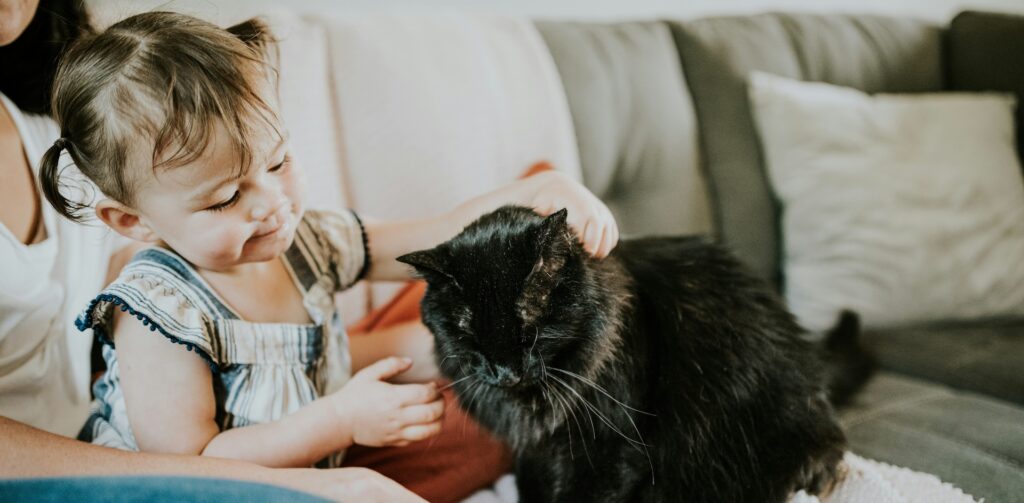
Cats are headstrong and cannot be forced into anything. Your cat will only come to cuddle if he feels like it. For a child that can sometimes be frustrating – cuddling is after all incredibly fun. But this is precisely where a valuable lesson lies: sometimes it is not only about what you want, but also about what the other wants.
As a parent you can teach your child that love and attention do not always come immediately, but that it sometimes takes a while. And that it is then even more fun. Explain to your child that your cat does not like to be picked up. But that if you sit quietly and wait, the cat will trust your child more and will come to him or her on its own. In this way your child discovers what patience is. And that not only helps your child in dealing with cats, but also in daily life – at school, for example, or in sports.
5. Letting a child get used to an older cat or kitten
For every cat a small or busy child can be impressive, but for older cats that are new in a family or a small kitten it is especially exciting. Children must learn to deal with this properly. As a parent you can solve this by making clear agreements with your kids and also taking it into account yourself. For example:
- Never leave a small child alone with your cat.
- Tell your child that a cat is not a toy, but a living being with feelings.
- Teach your child that he or she should not run towards the cat or kitten or scream loudly.
- Teach your child that he or she should approach the cat or kitten calmly, that it is better to sit quietly near the cat and to talk softly to the cat.
- Also teach your child that he or she must accept it if the older or young cat does not want contact or cuddles.
This interaction between children and cats is not only pleasant for your cat, but it also teaches your child that he or she must have respect for age and vulnerability. Explain all this clearly to your child, because with that you give him or her a valuable lesson.
6. Playing safely together
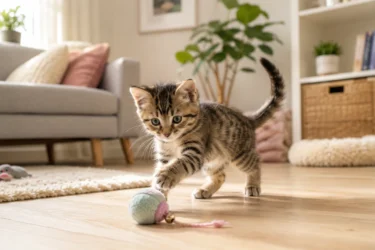
Playing is important for children and for cats, but it is good to teach your child how to play with your cat. Teach your child not to run after the cat and not to pull the cat’s ears or tail. Also explain to your child that the cat does not like that. But also show your child how he or she can play with the cat. Think of:
- Throwing a ball or paper ball so that the cat can chase it.
- Give your child a cat rod with a feather and let the cat hunt it.
- Cut holes in a large cardboard box and throw a toy mouse or a ball in it now and then.
By helping your child with this, he or she naturally learns how much fun it is to play with the cat in a safe way. And of course it is also a super fun way to have ‘quality time’ as a family: your child, the cat and you doing something fun together.
Tip: with a sturdy scratching post in the house, your cat always has a safe place to play and climb.
7. Cats also appreciate their privacy
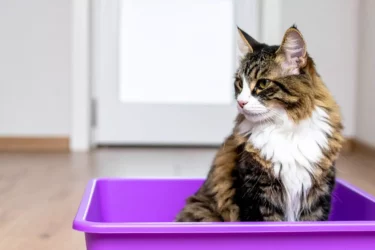
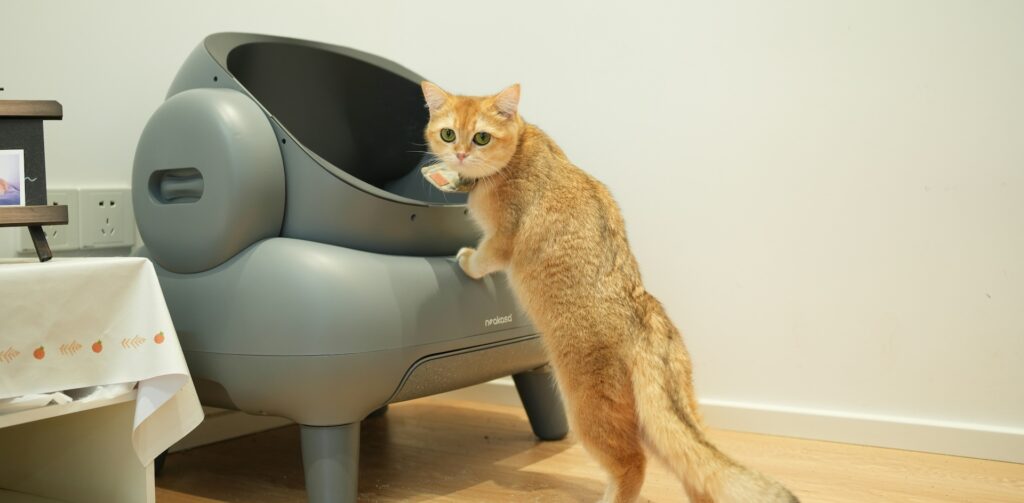
Everyone likes some privacy on the toilet. And for cats it is no different. Therefore always put the litter box in a place in the house where your cat can poop or pee in peace. And explain to your child that he or she must leave the cat alone when it is using the litter box – because as a child you wouldn’t want to be watched or disturbed when you are on the toilet yourself?!
Tip: looking for good cat litter? This is the best clumping cat litter!
8. Frequently asked questions about cats and children
- Is a cat good for children?
Yes, a cat can be very good for children. Because cats provide companionship, love and trust. It is therefore also important to teach your child to be kind to cats and other animals. - Are cats safe for children?
Cats are generally safe for children, but you must teach your children how to treat a cat respectfully and lovingly. Want to know how? In the text above we tell you exactly how to do that. - Why don’t cats get along well with children?
If children are too busy, handle the cat wildly, do not leave it alone or hurt it, then a cat can become scared or angry – it will then withdraw, become unclean or may lash out. But if you teach your child how to treat a cat respectfully, children and cats can live together very well. And even become the greatest friends! - Which cat breed is good with children?
There are cat breeds known to be child-friendly, such as the Maine Coon or the Ragdoll. But in general the character of the cat is more important than the breed. Therefore always choose a cat that suits your family situation.
Cats are wonderful pets and often true buddies for children. But a good bond only arises if you teach children how to deal with cats. If you teach them to respect boundaries, care for the cat, be patient, be kind and treat the cat calmly, then it will certainly work out. And that is nice for your cat, for your child and for you!
Disclaimer
Petrebels is not a veterinarian or behaviorist: all content, information and tips on this page are intended to inspire you and have an informative character. Does your cat have complaints or problems and are you in doubt about the health of your cat? Then always go to a veterinarian or behaviorist.